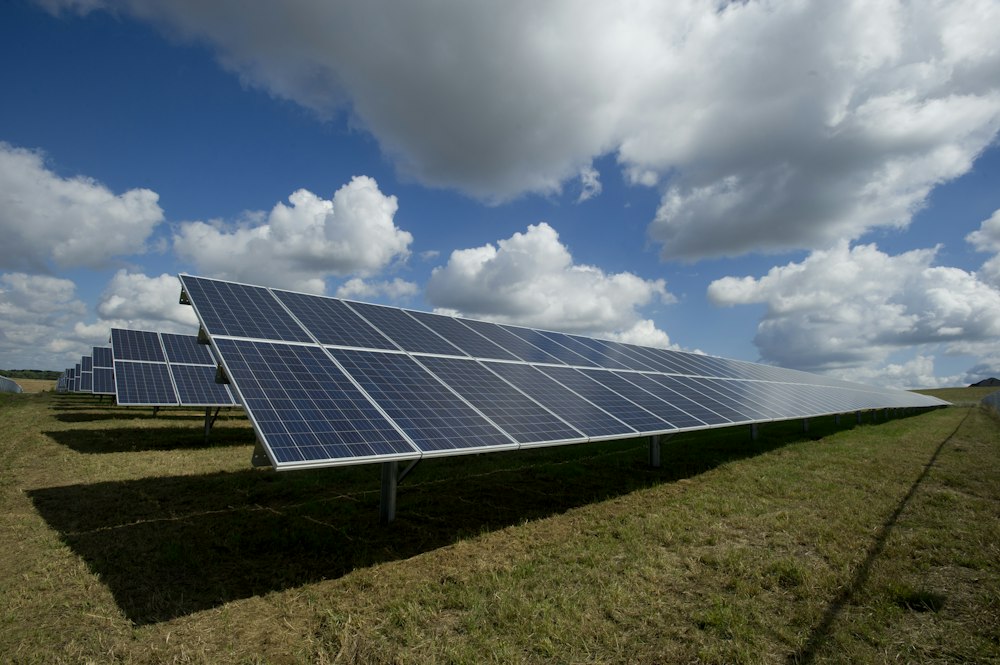
Australia already has one of the highest rates of residential rooftop solar adoption in the world, with more than 3.5 million homes now equipped with solar panels. For most of that adoption period, the primary financial benefit of solar came from feed-in tariffs — the rates at which households could sell surplus electricity generated during the day back to the grid. But as feed-in tariff rates have declined across most states, the value proposition of solar has shifted — and home battery storage systems are at the heart of the new equation.
A new generation of lithium-ion and lithium-iron-phosphate home battery products has entered the Australian market over the past two to three years, offering significantly improved performance, longer cycle life and lower cost per kilowatt-hour of storage capacity compared with their predecessors. For households with existing solar installations, these systems are enabling a fundamentally different relationship with the electricity grid.
How the Savings Work
The core principle of home battery economics in the Australian context is straightforward. Solar panels generate electricity when the sun shines — which for most of the day falls during hours when households are consuming relatively little power. Without a battery, this surplus electricity is either exported to the grid at the prevailing feed-in tariff rate, or simply wasted if the tariff is zero.
A home battery stores this surplus and makes it available during the evening hours, when household consumption is highest and when grid electricity is most expensive. By substituting stored solar electricity for grid electricity during peak consumption periods, households can dramatically reduce the volume of electricity they need to purchase from their retailer.
The financial impact depends on the size of the battery system, the household's consumption patterns, the local electricity tariff structure and the amount of solar generation. However, modelling by the Australian Energy Regulator suggests that a typical three-to-four-person household with a 10-kilowatt solar system and a 10-13 kilowatt-hour battery can reduce grid electricity purchases by 70 to 90 per cent, translating to annual bill savings of $1,800 to $3,200 depending on the state and the retailer.
The Role of Virtual Power Plants
Beyond individual household savings, home batteries are increasingly being enrolled in what are known as virtual power plants (VPPs) — networks of household batteries that are aggregated and managed as a collective resource by energy retailers or specialist operators. When participating in a VPP, a household's battery can be called upon to export stored energy to the grid during periods of high demand or network stress, in exchange for financial compensation.
VPP participation is voluntary and typically governed by agreements that specify the conditions under which the retailer can access the battery's stored capacity. Several Australian energy retailers now operate VPP programmes, and independent assessments suggest that participating households can earn an additional $200 to $600 per year on top of their self-consumption savings.
"The economics of home batteries have changed significantly over the past two years. The combination of reduced system costs, state government rebates and the opportunity to participate in virtual power plants has moved batteries from an aspirational purchase to a genuinely compelling financial decision for a large proportion of solar households."
State Incentives Making a Difference
Several Australian state governments have introduced rebate programmes specifically targeting home battery storage, recognising both the consumer benefit and the grid stability advantages of distributed storage. Victoria's Solar Homes Programme includes a battery rebate of up to $2,950 for eligible households. South Australia and Queensland have run similar initiatives, though the specific terms and availability of these programmes change over time and interested households should verify current offerings with state government agencies.
When combined with federal small-scale renewable energy certificates — which effectively reduce the upfront cost of battery installations — the total government support available to eligible households can reduce the effective purchase price of a battery system by 30 to 40 per cent.
What to Consider Before Installing
Energy advisers caution that home batteries are not a universal financial proposition, and that the decision depends on a household's specific circumstances. Key factors to evaluate include the current feed-in tariff rate, the household's electricity tariff structure, whether a time-of-use tariff is available, the size and orientation of the existing solar system, and the typical daily electricity consumption pattern.
Households that consume the majority of their electricity during daylight hours — such as retirees or those working from home — already capture much of the value of their solar panels through direct self-consumption, and may find that the incremental benefit of adding a battery is smaller than for households that are primarily away from home during solar generation hours.